
How to Prevent Mold During Hong Kong's Humid Season
Every March, as Hong Kong warms up, humid southern air meets cooler floors, walls, and glass surfaces. Moisture condenses instantly and homes can feel like caves full of damp air. Black spots start appearing around windows, bathrooms, and corners, and clothes stay damp for days. That is the familiar humid season many residents dread.
Mold grows extremely fast in this environment. Visible colonies can form within a day. If ignored, the result is not only a dirty-looking home but also more respiratory irritation, allergies, and asthma problems. This guide covers practical low-cost prevention methods and more efficient dehumidifier use.
Why do walls and floors start 'sweating'?
This humid-season effect happens when warm moist air meets cooler indoor surfaces such as tiles, walls, windows, and mirrors. The temperature difference turns water vapor into droplets. It is the same principle as cold drinks collecting water on the outside of the bottle.
- Reduce the temperature difference between the air and the surface where possible.
- Reduce humidity actively so mold loses the conditions it needs to grow.
Three quick anti-mold methods that cost little or nothing
Method 1: old newspapers plus baking soda
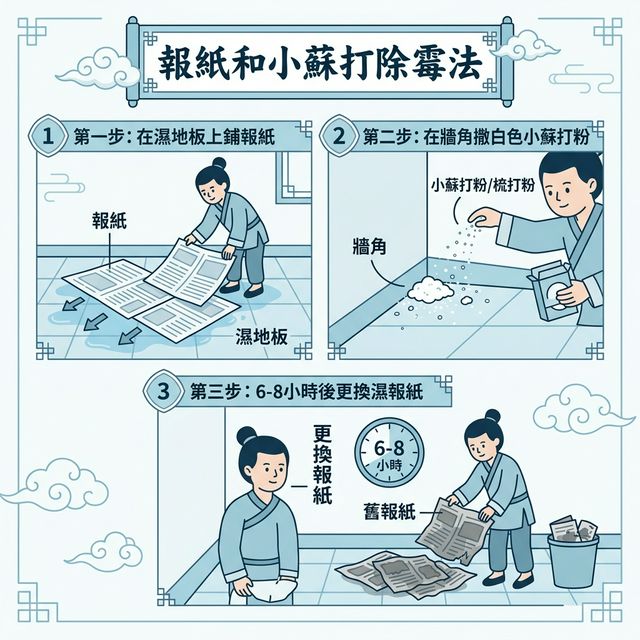
This works well on floors, corners, and low shelves that collect moisture. Layer newspapers over the dampest spots, and sprinkle a light amount of baking soda in corners or on windowsills. Replace soaked newspapers every 6 to 8 hours and refresh the baking soda daily.
- Newspaper absorbs water quickly and costs nothing.
- Baking soda helps absorb moisture and reduce odor while making the surface less friendly to mold.
- Replace wet paper promptly. Once soaked, it can become a mold source by itself.
Method 2: diluted dish soap
For walls, door frames, window frames, and other smooth surfaces, you can mix dish soap with water at roughly 1:10. Wipe surfaces with a damp cloth, then dry them with a separate cloth. A thin film remains on the surface and can reduce how easily moisture clings to it for a few days.
This is not a permanent fix, but it is inexpensive and often useful during the peak of the humid season.
Method 3: use the dehumidifier properly
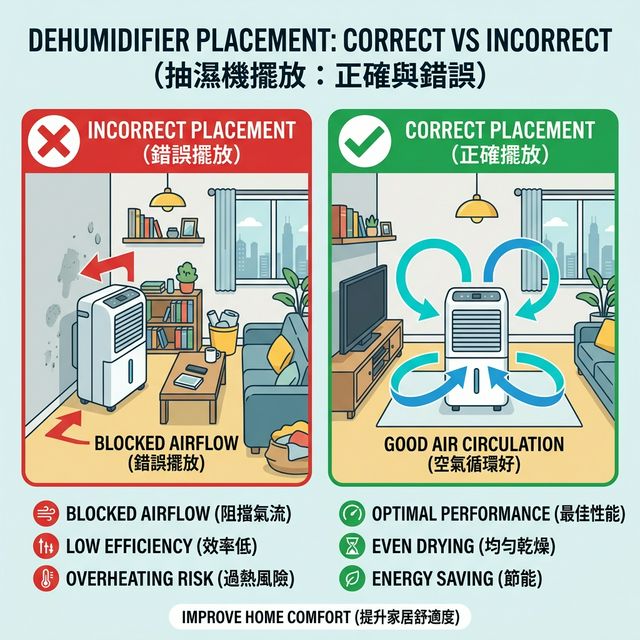
- Do not run it all day unless necessary. That usually wastes electricity.
- Do not leave windows open while using it, or moisture will keep flowing back in.
- Do not switch it on and off constantly in short bursts. That often reduces efficiency.
A better approach is to close the windows, focus on the room you use most, and run the dehumidifier for 2 to 3 hours at a time. Once humidity drops to around 50-60%, stop and monitor the room again later.
- Place the dehumidifier near the center of the room rather than tight against a wall.
- Clean the filter weekly so airflow remains strong.
- If drying laundry indoors, hang clothes 1 to 2 meters from the air outlet to speed up drying.
- Used this way, the cost is far lower than running the machine nonstop all day.
High-risk times and spaces
Early morning and early evening are often the worst periods because the temperature difference becomes more obvious again. During those hours, keep windows closed and avoid pulling outdoor humid air inside unnecessarily.
Common areas people forget
- Inside the AC: standing moisture can make musty smells worse after humid weather. Cleaning twice a year is often a good idea. Related reading: [Why Your AC Smells Bad and How to Remove the Odor Properly](/en/blog/ac-smell) and [How Often Should You Clean Your AC?](/en/blog/regular-ac-cleaning).
- Behind curtains: fabric near windows traps moisture and can start growing mold quickly.
- Under the mattress: body moisture collects there every night, and humid weather makes it harder to dry out.
- Bathroom silicone edges: these are classic mold hotspots and need regular cleaning.
What if mold spots already appeared?
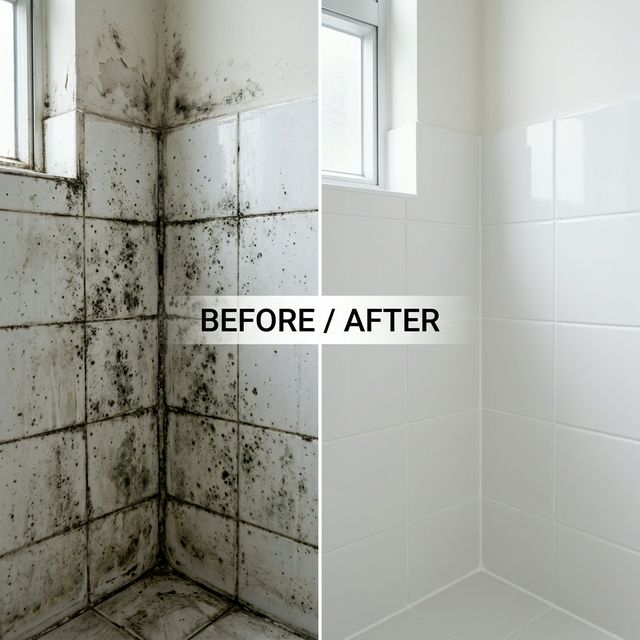
For small mold spots, wear gloves and a mask, make sure the area is ventilated, and clean carefully with an appropriate diluted bleach solution. Let it sit briefly, wipe it away, then dry the surface thoroughly.
Never mix bleach with acidic cleaners. For large mold spread or mold that has penetrated into walls or furniture, home cleaning usually is not enough and professional treatment is a better option.
Common misunderstandings
- “Opening windows always helps.” Not during the humid season. Outdoor humidity is often even higher, so you may only make the problem worse.
- “Clothes dry faster near the wall.” Damp walls can slow drying instead. Dry clothes in a more open area with airflow.
- “Running the dehumidifier all day is the most effective.” Once humidity is already down to a safe range, keeping it on nonstop becomes much less efficient.
A reasonable indoor target
- Humidity: 50-60%
- Temperature: around 22-25°C
- Ventilation: reduce during the dampest periods, then restore airflow once outside conditions improve
Summary
The humid season is unpleasant, but it becomes much easier to manage with the right habits. Low-cost moisture control, smarter dehumidifier use, and early treatment of mold spots can protect both your home and your health.
If the mold problem has already spread beyond what normal household cleaning can handle, professional cleaning is usually the safer and more effective next step.
FAQ
Q1: Should the dehumidifier be placed in the middle of the room or near a wall?
The middle of the room is usually better, or at least leave some distance from the wall so airflow is not blocked.
Q2: If mold spots already exist, does baking soda still help?
Baking soda is better for prevention than for removing existing mold. Clean visible mold first, then use baking soda or other preventive measures afterwards.
Q3: Can I run the AC during the humid season?
Yes, but avoid setting the temperature too low. Excessive indoor-outdoor temperature difference can make condensation worse.
Q4: How long does the dish-soap surface film last?
Usually a few days, depending on how damp the environment is and whether the surface gets wiped down again.
Q5: Are there other natural anti-mold methods?
Charcoal packs and similar absorbent materials can help a little, but they are usually weaker than proper humidity control. Keep stronger moisture absorbers away from children and pets.
Questions? Message us on WhatsApp
WhatsApp us