
Why Your AC Smells Bad and How to Remove the Odor Properly
In Hong Kong, summer is hot and humid, so most people turn on the AC as soon as they get home. But if the first thing you notice is a bad smell instead of cool air, it quickly becomes frustrating.
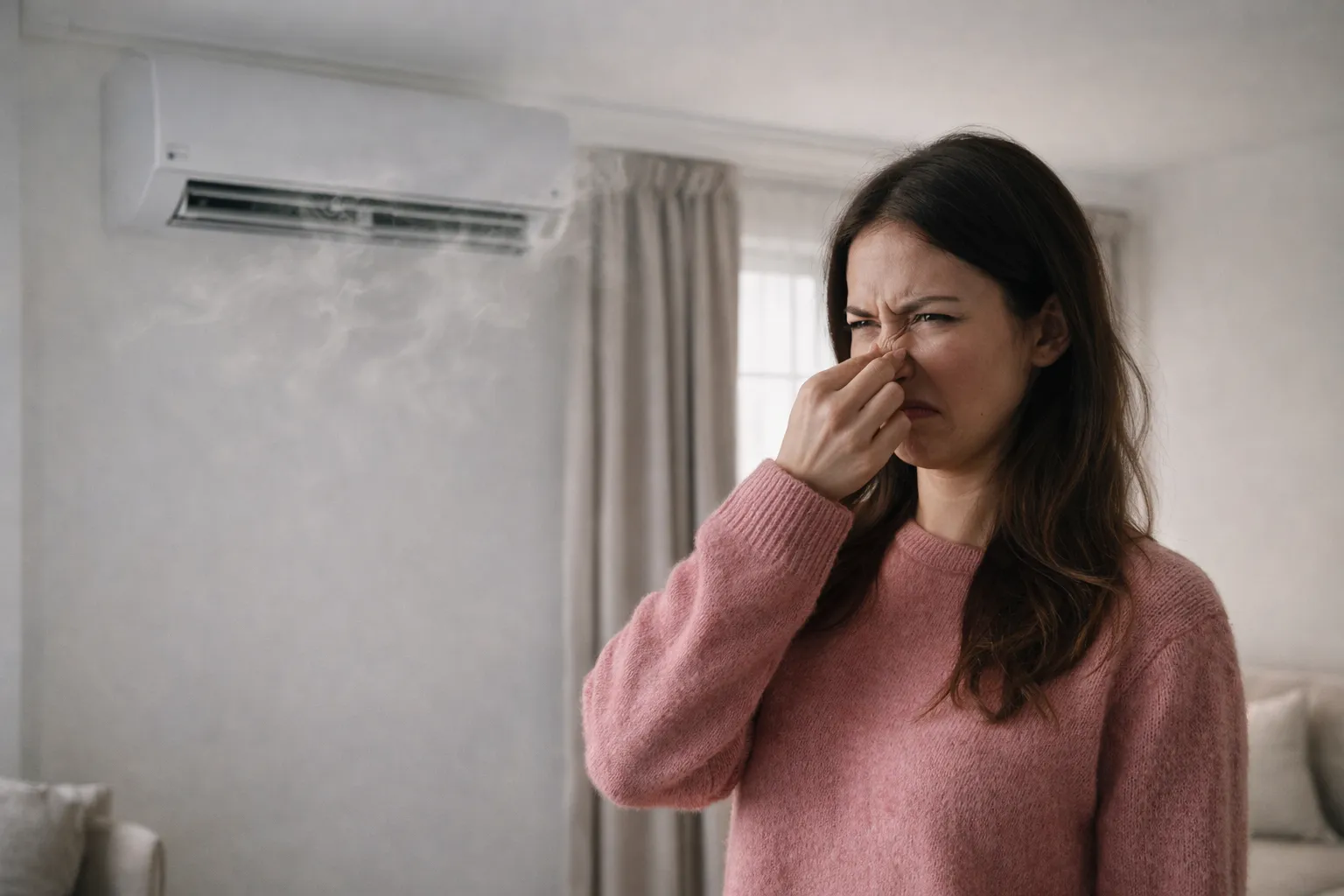
Many households run into AC odor issues. It is not only unpleasant. In many cases it is also a warning sign of indoor air pollution. If ignored for too long, it can worsen allergies, trigger asthma symptoms, or irritate the skin and respiratory system.
What causes an AC to smell?
An AC works like a mix of an air intake system and a dehumidifier. Without regular maintenance, dust, moisture, and residue build up inside. Common causes include:
- Mold growth: Hong Kong is famously humid. Cooling creates condensation, and if the unit is shut off before drying out, leftover moisture becomes an ideal environment for mold in the drain pan and blower wheel.
- Dust, skin flakes, and pet hair: Filters and coils easily collect organic debris. Once mixed with moisture, that buildup becomes food for bacteria.
- Blocked drainage or sewer backflow: If the drain is connected poorly, for example directly to a wastewater line without proper trapping, foul air can flow back into the room.
What do different smells usually mean?
The smell often gives you a clue about the actual issue inside the unit:
- Musty smell: the most common one. It usually means mold is already growing on the coil, blower wheel, or filter. It is often strongest right after startup.
- Sour or sweaty smell: skin oil, cosmetics, or cooking fumes may have been pulled into the unit and broken down by bacteria.
- Sewage or rotten-egg smell: often linked to a drain pipe connected to the building wastewater system with backflow problems.
- Burnt or gas-like smell: could point to wiring or component issues. Stop using the unit and get it checked professionally.
Simple things you can try yourself
If the smell is still mild, you can try a few low-risk steps first:
- Wash the filter regularly with water and a soft brush, then let it dry fully in the shade. A diluted disinfecting solution can also help with odor control.
- Use fan-only mode before and after cooling so the inside of the unit can dry out more completely.
- Wipe the air outlet with a cloth or alcohol wipe wrapped around a small brush to remove visible dark mold near the louvers.
- Run the unit at a very low temperature with windows open for a while. The heavier condensation can sometimes flush odor particles off the coil surface.
When should you call a technician?
DIY steps may help temporarily, but the internal structure of an AC is hard to clean properly without opening it up. It is time to call a technician if:
- The smell returns within a day or two after you clean the filter.
- You can see black mold spots or sludge on the blower wheel through the air outlet.
- The unit smells bad and has also started dripping or blowing much weaker air.
- The AC has been used for one or two years without any deep cleaning.
A professional deep clean involves opening the casing and using pressure washing with suitable cleaning agents to clean the coil and blower wheel thoroughly. The wastewater that comes out is often enough to explain the smell immediately.
Daily habits that help prevent AC odor
Prevention is much easier than fixing the problem later. Good daily habits make a big difference:
- Use fan mode before shutdown for 15 to 30 minutes so the inside can dry out.
- Reduce indoor odor sources such as heavy cooking smells or smoking in the same room.
- Keep the room ventilated when weather allows, and use a dehumidifier on very damp days to keep humidity closer to 50-60%.
- Clean the filter every season, or every 1 to 3 months depending on use.
Summary
An AC is one of the most important appliances in summer, and bad odor should not be treated as a minor annoyance. If the inside of the unit stays dry and maintenance is done regularly, mold and smell are much easier to avoid.
If the smell keeps coming back, a proper deep clean by an experienced team is usually the most reliable fix. Regular AC cleaning improves air quality, restores cooling performance, and can even reduce your electricity bill over time.
Questions? Message us on WhatsApp
WhatsApp us